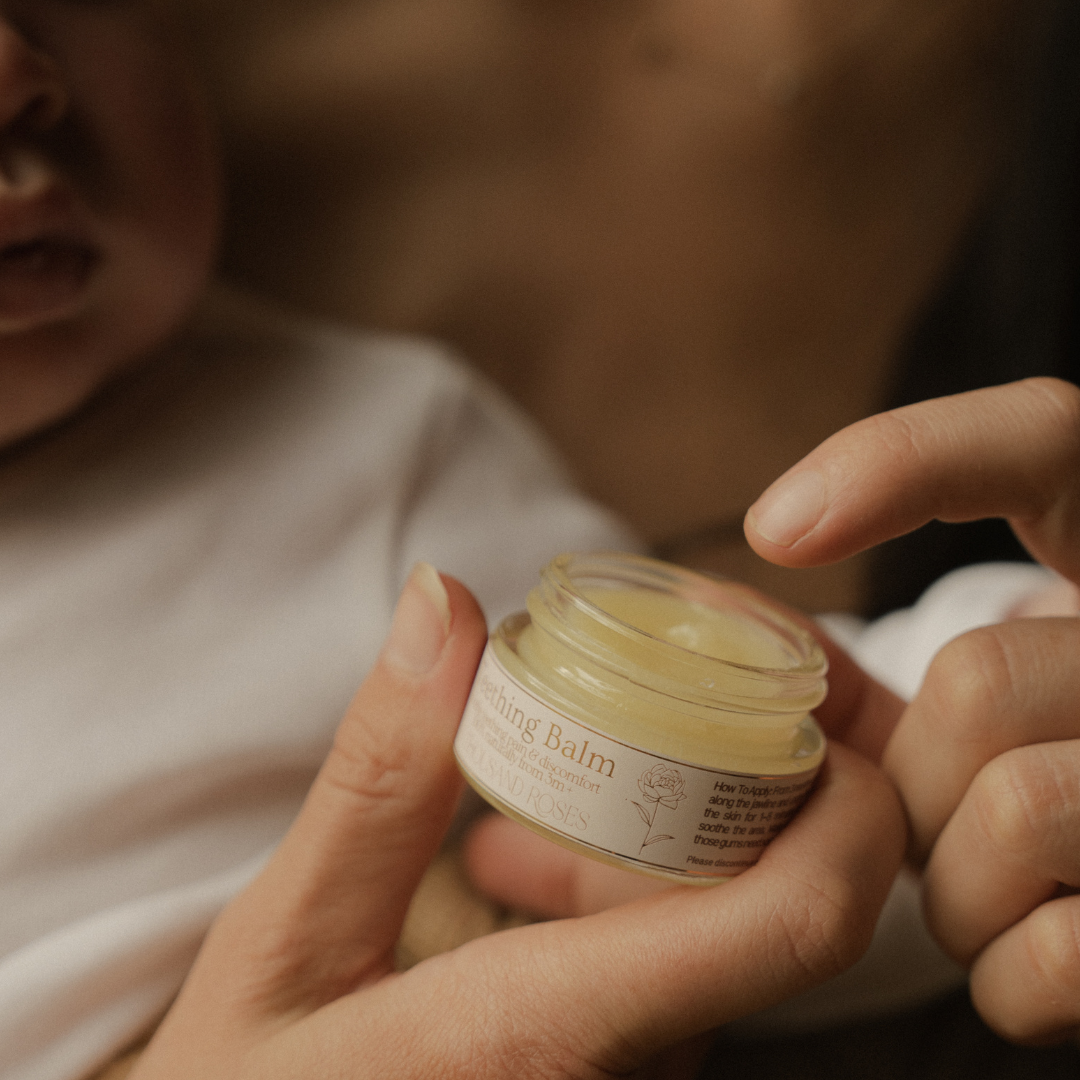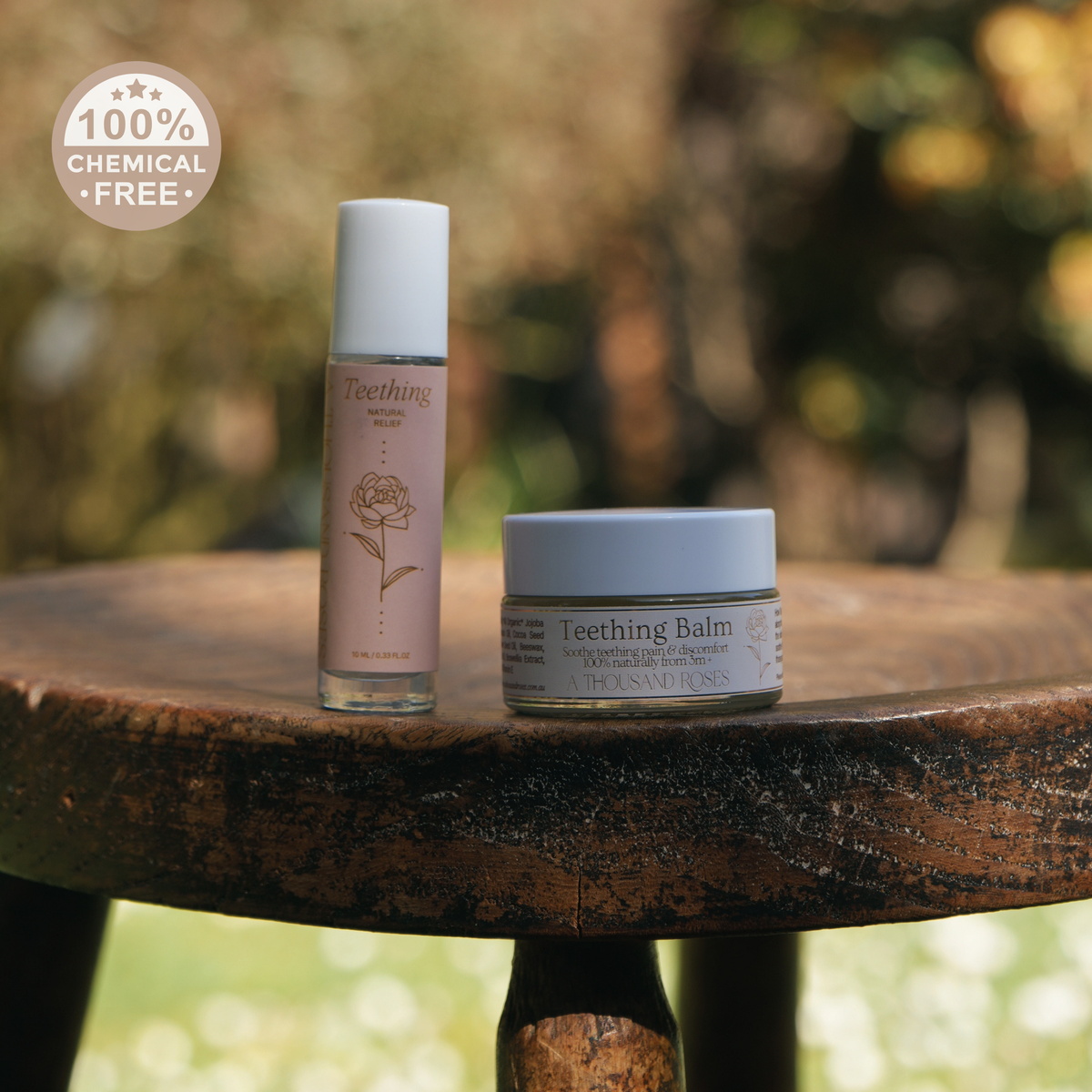



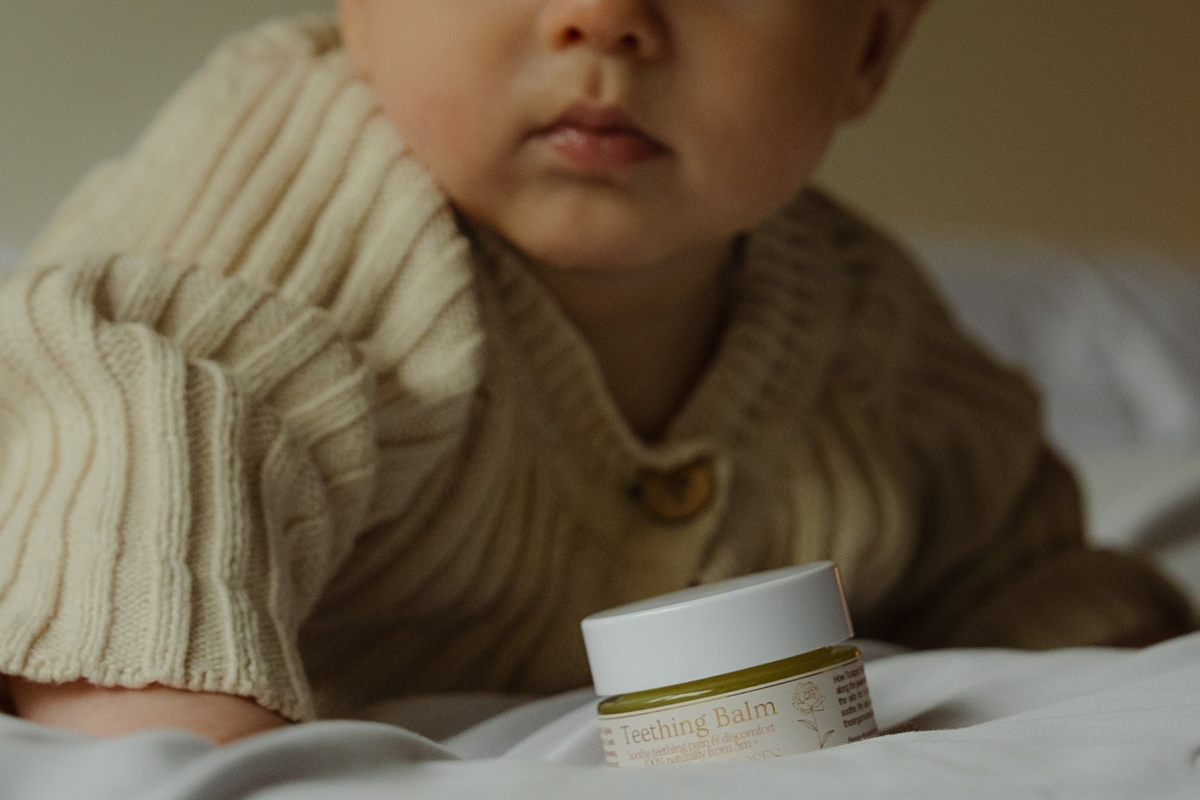
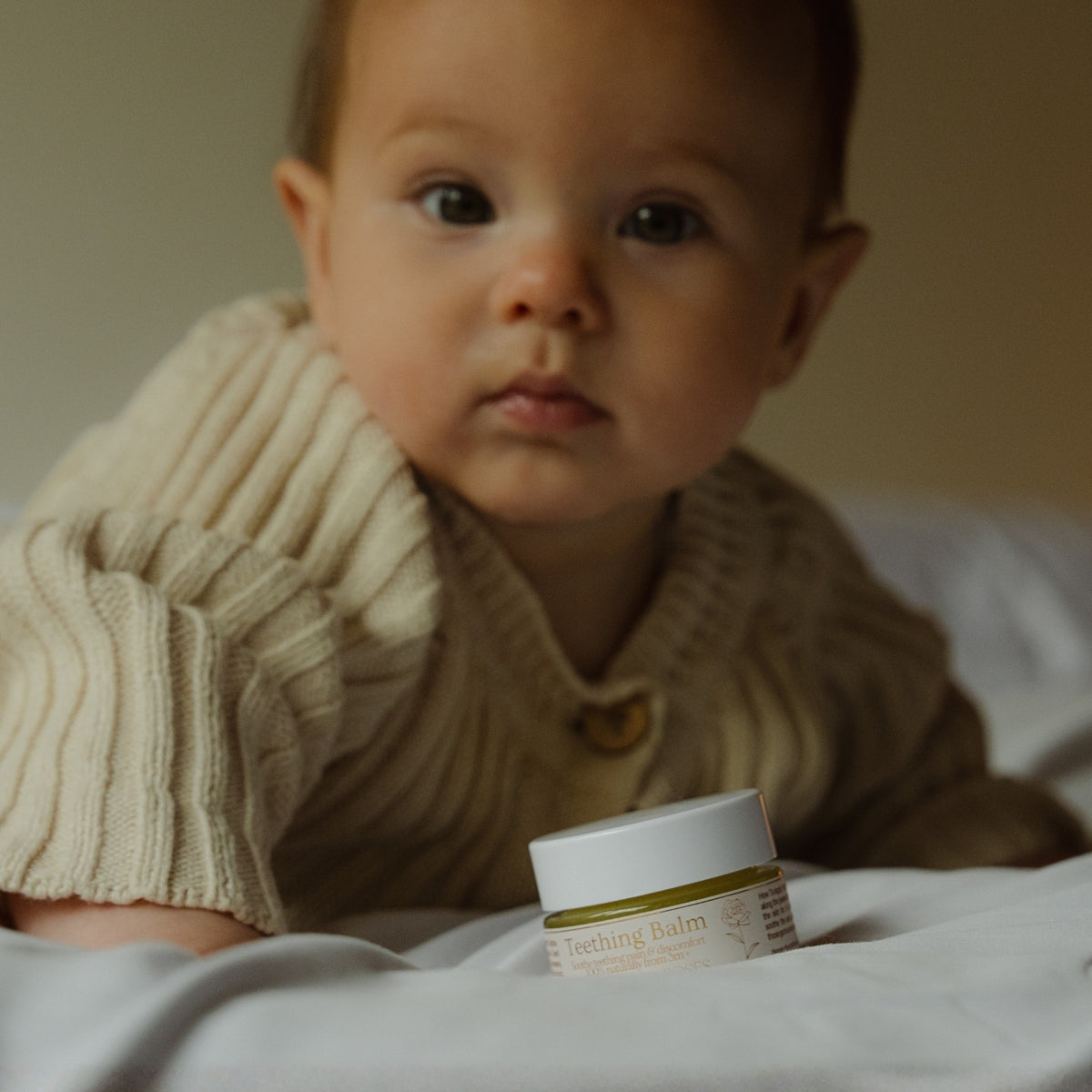

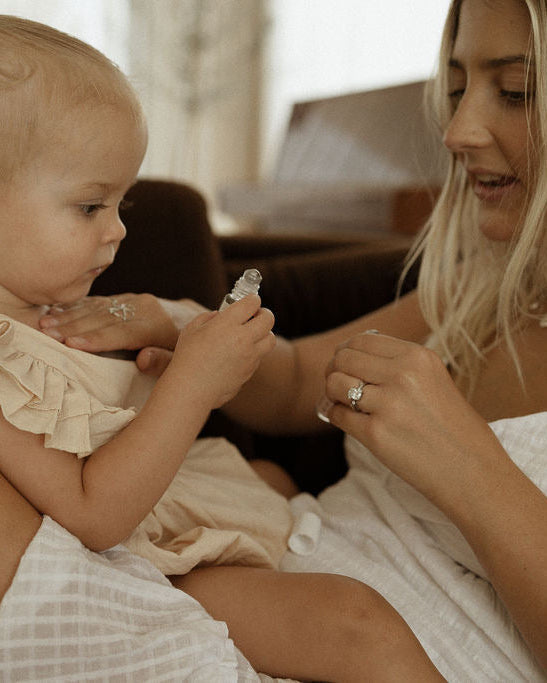
This teething roller has been a lifesaver, nothing else seems to work to help my little girl and this helps her so much
Teething Roller vs Traditional Teething Gels: What's Safer for Your Baby?

When my daughter Mila started teething, everything changed almost overnight.
She went through a significant sleep regression and I found myself awake at all hours trying to comfort her and help her settle. Like many parents, I was exhausted and looking for something, anything, that might help.
At the time, I already had a strong interest in natural health and wellbeing. I had also spent years learning how quickly life can change when your child is going through a health challenge. Earlier in Mila's journey, after her heart surgery, I had created the Tummy Roller to support digestive discomfort and the Calm Roller to support her nervous system. So when teething became our next challenge, I naturally started researching what options were available.
I looked at what was commonly recommended to parents, spoke to other mums and spent countless hours reading about plant compounds that had traditionally been used to support discomfort and inflammation. That research eventually led me to copaiba and became the starting point for what would later become the A Thousand Roses Teething Roller.
This article isn't about telling parents what they should choose. It's about sharing what I learned during that journey, why I created our Teething Roller and some of the questions parents should consider when comparing different approaches.

What Concerned Me About Traditional Teething Gels
One of the things that surprised me during my research was how little most parents knew about what was actually in many teething products.
That's not a criticism. When your baby is distressed, you're tired and somebody recommends a product, it is natural to reach for it.
I was that parent too.
As I started digging deeper, I learned that some teething gels used around the world have historically contained ingredients such as benzocaine or lidocaine. Various health authorities have issued warnings and guidance around the use of some of these ingredients in young children due to potential safety concerns.
Continuing my research, I became increasingly focused on the implications of repeated application inside a baby's mouth. Many parents may not realise how often these teething products are being applied during difficult periods, particularly when sleep disruption and discomfort continue for days or weeks at a time. I started questioning whether there was a way to support teething discomfort without repeatedly applying products like those directly to sensitive gums. That line of thinking ultimately influenced both my decision to create a topical roller and the ingredients I chose to include.
Here in Australia, teething products may contain different active ingredients, but my biggest question wasn't necessarily whether a particular product was safe when used correctly. It was whether there might be another approach that parents could consider before reaching straight for medicinal products.
For me, it wasn't about proving one option was right and another was wrong.
It was simply about wanting to understand the ingredients, how they worked and whether there were alternatives that aligned more closely with my own approach to family wellbeing.
Is Teething Gel Safe for Babies?
This is one of the questions I often hear.
The honest answer is that it depends on the specific product, its ingredients, your child's age and whether the product is used according to the manufacturer's directions.
Parents should always read labels carefully, follow usage instructions and seek advice from their pharmacist, GP, maternal health nurse or paediatric healthcare provider if they have concerns.
One thing I always encourage parents to do is move beyond marketing claims and look at the actual ingredients and application method.
Ask questions. Understand what you're using. Know why you're using it. The more informed you are, the more confident you'll feel in the decisions you make for your family.
Why I Chose a Natural Roller Instead
When I started developing the Teething Roller, I was trying to create something I felt comfortable using with my own daughter. A natural teething support I could trust.
One of the reasons I chose a roller format was because it allowed me to create a carefully diluted blend suitable for external application. I also found the roller itself offered a sensory experience that helped Mila settle more easily during difficult moments.
That external application became an important part of the design.
Unlike a teething gel, the Teething Roller is applied topically rather than inside the mouth. That distinction was important to me and remains one of the key differences between the two approaches.
For families wanting to learn more about the different forms of teething support available, visit our Teething Page.

What I Think Parents Commonly Misunderstand About Teething
Many parents simply aren't prepared for how disruptive teething can be.
We tend to talk about teething as a normal developmental milestone, which it is, but that doesn't make it easy.
When your baby isn't sleeping, you're not sleeping either. When they're uncomfortable, unsettled and difficult to soothe, it affects the whole family.
In my experience, parents often feel pressured to find an immediate solution. Sometimes that leads them to use products without really understanding the ingredients or considering alternative approaches first.
My advice is always to slow down, gather information and choose the option that feels right for your child and your family's circumstances.
What Surprised Me Most After Launching the Teething Roller
When I first created the Teething Roller, my goal wasn't to build a global product. I simply wanted to help families in the same way I had hoped to help Mila.
Since then, more than 100,000 parents around the world have purchased the Teething Roller. What has surprised me most isn't necessarily the feedback itself, it's how consistent the feedback has been.
Parents often tell us they were sceptical at first. Some say they couldn't believe it would make a difference. Others tell us they only tried it because another mum recommended it.
Then many of the stories start to sound familiar. They tell us their baby seemed more settled. They tell us bedtime became less stressful. They tell us they managed to get some sleep themselves.
As a parent, those are the stories that resonate with me most.
Not because they validate the product, but because I remember exactly what those sleepless nights felt like.
What Parents Should Realistically Expect
One thing I'm always careful about is not overpromising.
Every child is different. Every teething experience is different.
Some parents tell us they notice a difference very quickly. Others tell us it took several applications before they felt they were seeing an improvement. Some families may not have the same experience at all.
That's why I think it's important to approach any teething product with realistic expectations. No product can eliminate every challenge associated with teething.
The main goal is simply to support your baby through a difficult period in a way that aligns with your family's preferences and values.
If you'd like to learn more about the product that came from our own teething journey, you can view the Teething Roller.
When It's Time to Seek Professional Advice
While teething can be uncomfortable, there are times when parents should seek professional medical advice.
If your baby develops a significant fever, refuses fluids, appears unusually distressed or you are concerned for any reason, contact a healthcare professional.
The Teething Roller was never created to replace medical care, diagnose conditions or substitute the advice of a qualified healthcare practitioner. It was created as a supportive option for families navigating a common developmental stage.

Final Thoughts
If there's one thing I've learned from both my own experience and from speaking with thousands of families, it's that there is rarely a single solution that works for everyone.
When comparing a teething roller vs a teething gel, I encourage parents to look beyond the marketing. Read the ingredients. Understand how the product is designed to be used. Ask questions.
Seek professional advice when needed. Most importantly, trust yourself. Nobody knows your baby better than you do.
For me, this journey started with Mila, a lot of sleepless nights and a desire to find a gentler option for my own family. Everything that followed grew from that experience.
Share
Featured Products